

Speed Limiter Installation Singapore (TP-Authorised)
Eligibility check, authorised installation, speed verification,
and audit-ready documentation.
Eligibility Check
Confirm Eligibility Before You Book Installation
Share your vehicle details. We’ll confirm if you’re affected under TP / bizSAFE checks and what documentation you’ll need for inspection.
TP roadside inspection readiness (60 km/h limit)
Speed verification + proof pack guidance
Documentation checklist for audit / renewals
bizSAFE 3 / 4/ STAR evidence need from 1 Jan 2026
TP-aligned process
Verified speed configuration
Audit-ready documentation
Want the full rules, deadlines, and what TP/bizSAFE checks?
View Requirements & Compliance →TP speed limiter requirements (Singapore)
Why Speed Limiter Compliance Matters
(and What Inspections Look For)
Singapore’s speed limiter regime is enforced in phases. If your vehicle is affected, compliance isn’t just “installing a device” — it’s being able to pass checks with verified speed configuration and supporting documentation when requested.
You’ve already submitted your details above. This section explains what typically gets checked during TP roadside inspections and (for some fleets) what evidence may be expected for bizSAFE 3/4/STAR audit readiness from 1 Jan 2026.
You’ve already submitted your details above. This section explains what typically gets checked during TP roadside inspections and (for some fleets) what evidence may be expected for bizSAFE 3/4/STAR audit readiness from 1 Jan 2026.
Who is affected
- Lorries in regulated categories (vehicle profile and deadline vary by phase)
- Existing and newly registered vehicles in the covered classes
- Compliance checks can occur during roadside inspection and audit review cycles
What must be compliant
- Use a TP-approved speed limiter solution and correct installation method
- Ensure the vehicle is set to the required limit with speed verification completed
- Maintain the system so it remains functional and tamper-resistant over time
What happens if you’re not ready
- You may face failed inspections or be asked to rectify and re-verify
- Rectification can mean rework, downtime, and repeat checks
- Missing paperwork is a common reason fleets get delayed or flagged
Documentation you should keep ready
- Proof of Installation (work order + install photos / identifiers)
- Speed Verification Record (results kept for inspection/audit reference)
- These support TP checks and compliance reviews when evidence is requested
Funding support (PSG / SFEC)
Want funding help? Don’t guess. Eligibility depends on your business profile and the correct quotation format.
See Cost & Quote →bizSAFE audit readiness (from 1 Jan 2026)
For fleets pursuing bizSAFE 3/4/STAR, speed limiter compliance may be reviewed as part of audit evidence.
Keep installation records and speed verification proof ready for review.
See Requirements & Compliance →Keep installation records and speed verification proof ready for review.
Find the right starting point

For Fleet Owners
Understand eligibility, installation planning, compliance records, and what to prepare before booking.

For Installers
Understand installation workflow, verification steps, documentation, and support after installation.
Compliance workflow
How Speed Limiter Compliance Works
A clear, TP-aligned installation workflow — from choosing the right method to speed verification and inspection-ready documentation.
Already completed the eligibility check above? Great — If your vehicle qualifies, you can request a speed limiter installation quote below.
Already completed the eligibility check above? Great — If your vehicle qualifies, you can request a speed limiter installation quote below.
Step 1 — Confirm Compliance Method
(CAN / alternative)
We confirm the correct limiter approach for your vehicle model and integration type, so the installation is compliant and predictable.
See how the NC80 speed limiter works →
See how the NC80 speed limiter works →

Step 2 — TP-Authorised Installation & Speed Configuration
Installed by authorised technicians and configured to the required 60 km/h compliance limit with clean workmanship and traceable setup.

Step 3 — Speed Verification (recorded results)
We verify speed behaviour after installation and record the results so you have defensible evidence if questions come up later.

Step 4 — Documentation Issued
(inspection-ready proof pack)
You receive the key compliance documents (installation record + verification record) prepared for Singapore roadside inspection checks and audits.

Step 5 – Support for Inspections & Follow-Ups
If clarification or re-checks are needed, we help you respond quickly with supporting documentation, re-verification where required, and the assurance of a 5-year NC80 warranty.
See Support & Warranty →
See Support & Warranty →
Trusted for Singapore Speed Limiter Compliance
Built for Traffic Police roadside inspections and bizSAFE 3/4/STAR audit evidence — not just device installation.

TP-Aligned Installation
Installed by authorised professionals

Speed verification (recorded)
Configured to required speed limits

Audit-Ready Documentation
Aligned to Singapore inspection needs

Local Technical Support
Experienced fleet compliance specialists
Proof issued after installation and verification
Designed for inspection and audit readiness.
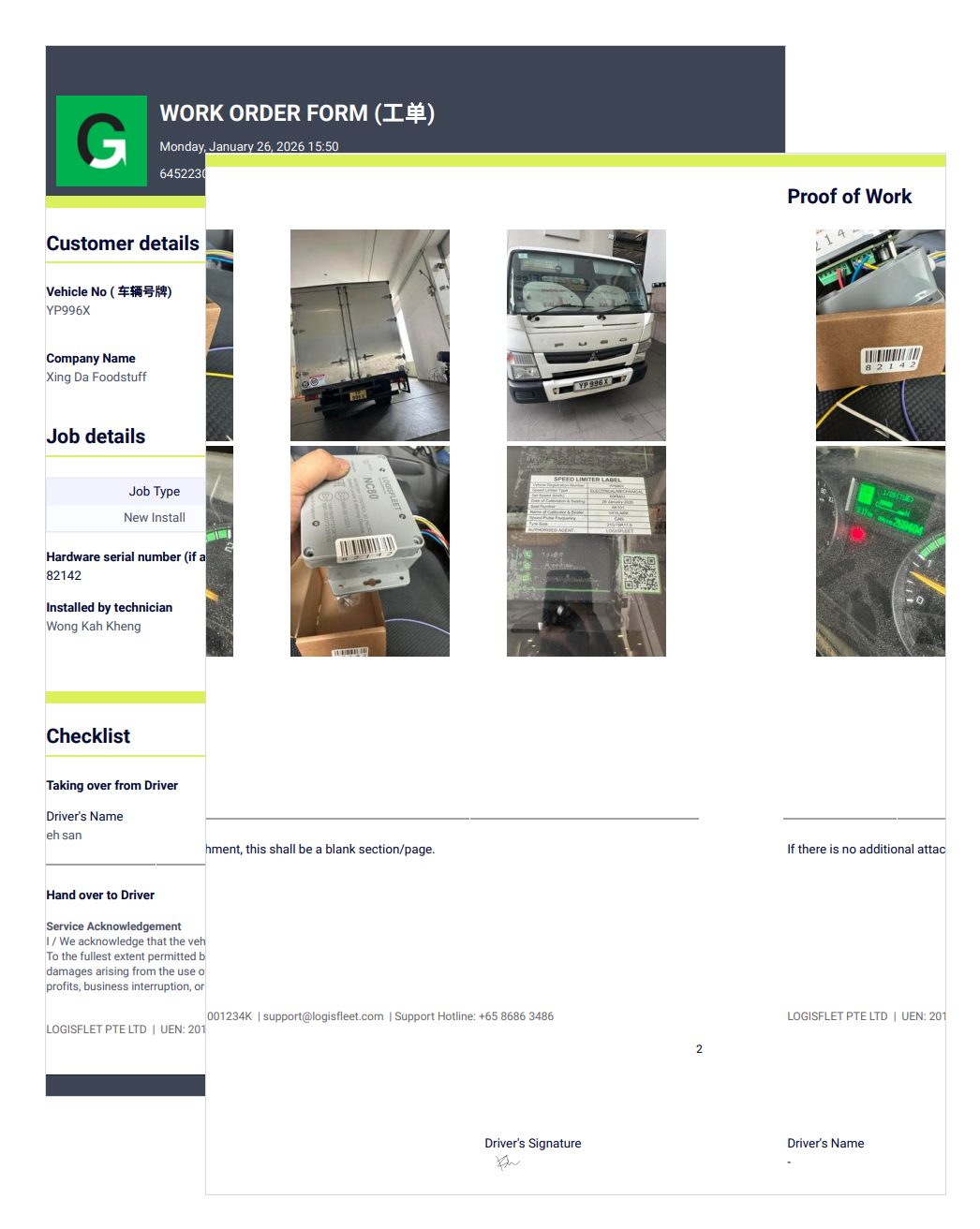
Work Order + Photos
Job traceability (photos + details).
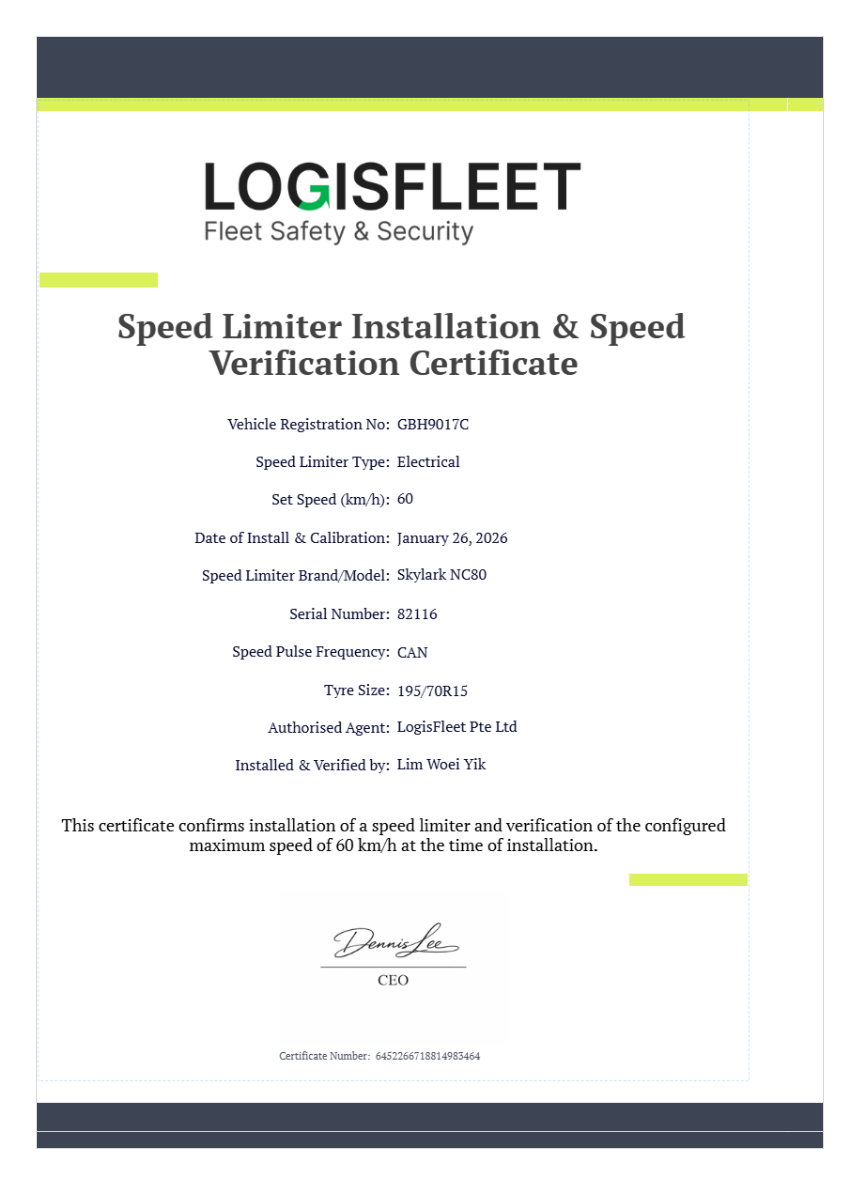
Verification Record
Verified 60 km/h result (dated).
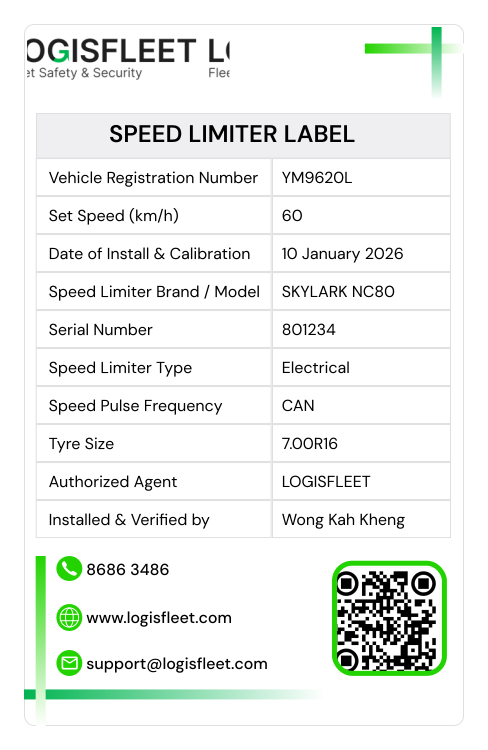
Windscreen Label
Quick in-cab compliance reference.
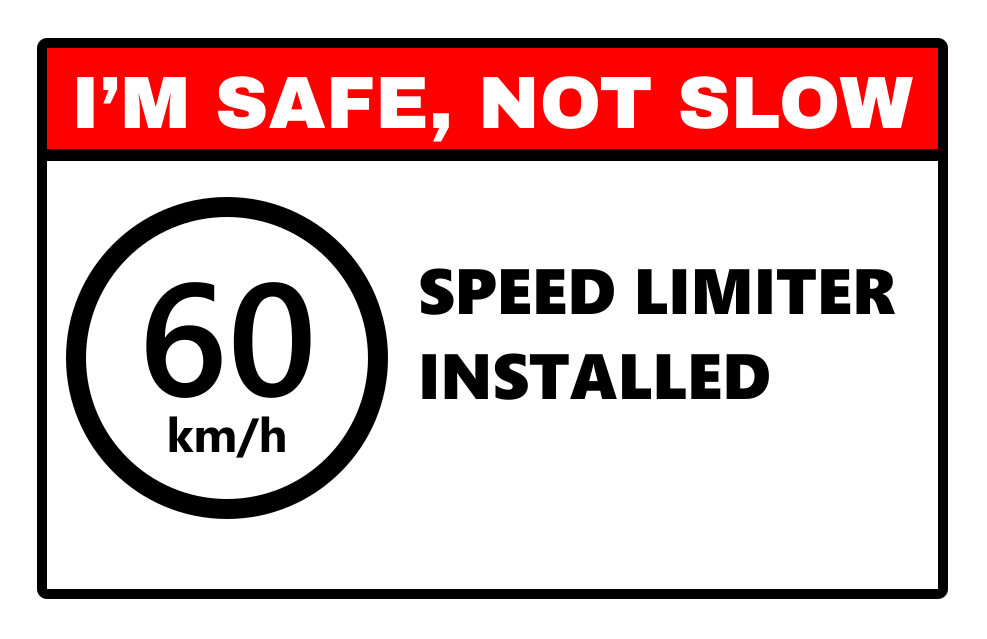
Rear Label
High-visibility compliance marker.
Issued per vehicle. Recorded per job. Reproducible on request.
Explore related compliance topics
Explore the pages covering device selection, quotation, warranty, documentation, and role-specific guidance.
- NC80 speed limiter — device overview, features, and installation approach
- Cost & quote — factors, process, and quote request form
- Support & warranty — post-install support and 5-year NC80 warranty
- Proof & documentation — records issued after installation and verification
- For fleet owners — planning, eligibility, records, and booking guidance
- For installers — installation workflow, documentation, and support expectations
Speed Limiter FAQ for Singapore Fleets
Clear answers on TP requirements, inspection outcomes, speed verification, and the documentation you’ll need.
Do I need to install a speed limiter for my vehicle in Singapore?
It depends on your vehicle category and compliance needs. Under the Traffic Police regime, lorries with MLW of 3,501kg to 12,000kg are being brought into mandatory speed limiter installation in phases.
Separately, from 1 January 2026, bizSAFE RM audits include verification checks on speed limiters installed in lorries, so companies operating lorries should review both the legal requirement and the audit expectation early.
Separately, from 1 January 2026, bizSAFE RM audits include verification checks on speed limiters installed in lorries, so companies operating lorries should review both the legal requirement and the audit expectation early.
Do I need an authorised speed limiter installer in Singapore?
Yes. The Singapore Police Force states that speed limiters must be installed through an authorised agent. This matters because compliant installation is not just about fitting the device — it also affects whether the vehicle can pass checks, whether records are properly maintained, and whether the installation can be traced back to an approved source.
What documents will I need for inspection or audit?
You should expect to keep the key records tied to the installation and speed verification of the vehicle. In practice, fleet owners should be prepared to produce installation and verification-related documents when requested for inspection, compliance review, or audit follow-up, especially where speed limiter checks form part of a broader compliance process. From 1 January 2026, bizSAFE RM audits include verification checks on speed limiters installed in lorries.
Standard documents required as follow:
1. Proof of Installation such as the work order document
2. Speed limiter label on vehicle's windscreen
3. Speed limiter certificate for record keeping
4. Speed limiter sticker on rear vehicle.
These documents support Traffic Police inspections and bizSAFE RM audits when evidence is requested.
Standard documents required as follow:
1. Proof of Installation such as the work order document
2. Speed limiter label on vehicle's windscreen
3. Speed limiter certificate for record keeping
4. Speed limiter sticker on rear vehicle.
These documents support Traffic Police inspections and bizSAFE RM audits when evidence is requested.
How long does installation take?
Installation time depends on the vehicle model, wiring condition, and installation method. For most standard cases, the job is typically completed within about 1 to 1.5 hours per vehicle, including setup and verification steps, though some vehicles may take longer if additional checks or rectification work are needed.
Will installing a speed limiter affect drivability?
A properly configured speed limiter should control top speed without making normal driving unnecessarily harsh. Drivability depends heavily on the installation approach and the vehicle’s compatibility, which is why the quality of setup, configuration, and verification matters. On suitable vehicles, a CAN-based approach can provide a smoother and more controlled response than cruder limiting methods.
What happens if my vehicle fails inspection or needs rework?
The vehicle will usually need the issue to be identified and rectified before it can clear the required checks. That may involve reviewing the installation, verification settings, or any fault affecting proper operation. SPF has also stated that non-compliant lorries can fail inspection, face enforcement action, and may be prohibited from road use, with road tax renewal affected in enforcement cases.
Can LogisFleet support fleet installations across multiple vehicles?
Yes. Fleet installations can be planned across multiple vehicles and, where needed, rolled out in phases. This is often the better approach for operators who need to manage workshop time, vehicle availability, documentation consistency, and compliance deadlines across the fleet rather than treating each vehicle as a separate ad hoc job.
Is PSG funding available for speed limiter installation?
PSG support for speed limiter adoption has been announced as time-limited for eligible SMEs in Singapore, and it’s tied to conditions such as the vehicle deadlines not having passed. In practice, funding is not “automatic”—you still need the right paperwork and a compliant vendor workflow so your submission isn’t rejected due to missing documentation.
If you’re pursuing PSG, you should treat speed verification records and invoices/installation proof as part of your funding file, not an afterthought. Also, remember this is compliance-driven; TP enforcement and deadlines move regardless of your grant status, so don’t wait for funding approval to start planning your installation schedule.
If you’re pursuing PSG, you should treat speed verification records and invoices/installation proof as part of your funding file, not an afterthought. Also, remember this is compliance-driven; TP enforcement and deadlines move regardless of your grant status, so don’t wait for funding approval to start planning your installation schedule.
How does bizSAFE affect speed limiter requirements from 1 Jan 2026?
From 1 Jan 2026, many fleets pursuing bizSAFE 3/4/STAR will need to demonstrate stronger, documented risk controls around vehicle operations. For regulated lorries in Singapore, TP speed limiter compliance can become part of what auditors look for when assessing whether your controls are practical, implemented, and verifiable—not just stated on paper.
Treat this as an audit-readiness workflow: use a TP-authorised installer, complete speed verification, and keep a clear proof pack (installation records, photos, configuration details, and verification results). That way, if you face an inspection or audit review, you can show traceable evidence—not assumptions.
Treat this as an audit-readiness workflow: use a TP-authorised installer, complete speed verification, and keep a clear proof pack (installation records, photos, configuration details, and verification results). That way, if you face an inspection or audit review, you can show traceable evidence—not assumptions.