Video Proof, On Demand

See What Happened. Prove What Matters.

Capture multi-camera footage, auto-tag critical events like harsh braking or impact, and instantly export time-stamped clips. Built for dispute resolution, insurance defense, and operational accountability.

How Camera & Event Evidence Works

When a critical driving event occurs, footage from connected vehicles cameras can be reviewed alongside event data such as time, vehicle, and location. Relevant clips can also then be retrieved and exported for incident review, insurance claims, or internal investigation.
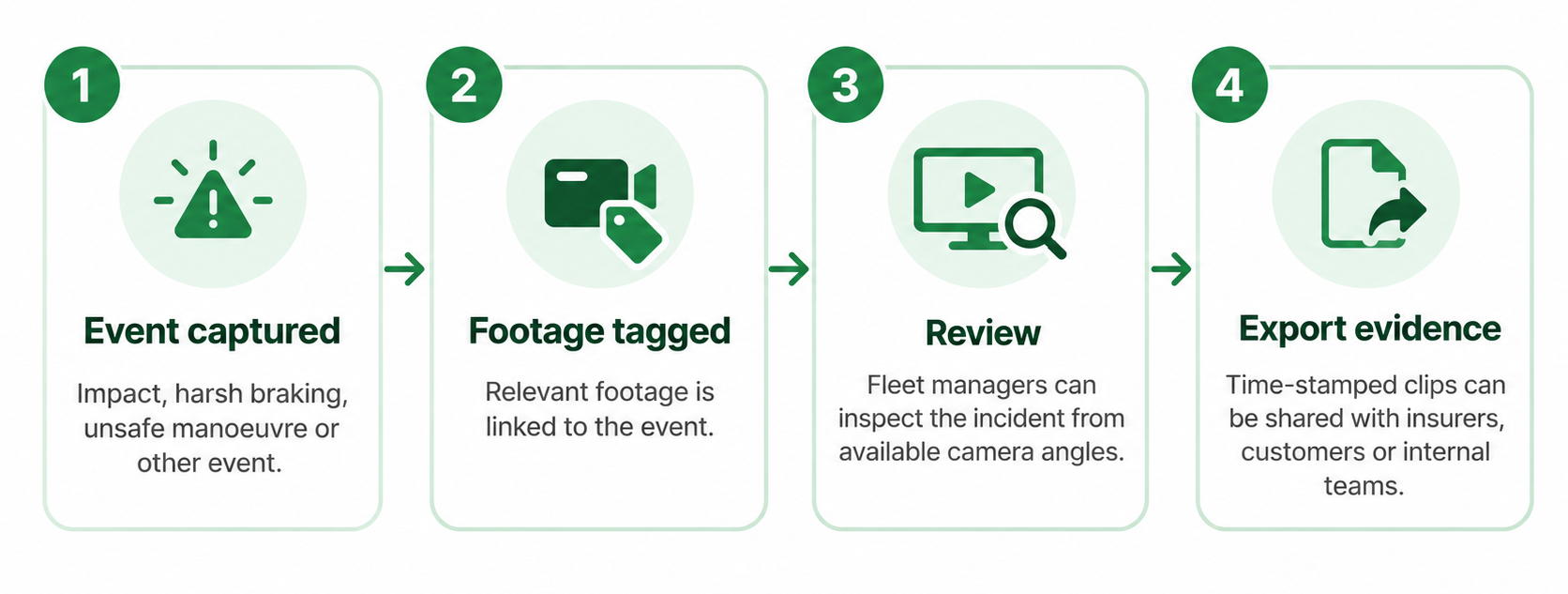
Four-step fleet incident workflow showing: 1. Event captured with impact, harsh braking, unsafe manoeuvre or other event, 2. Footage tagged linking relevant footage to the event, 3. Review where fleet managers inspect the incident from camera angles, 4. Export evidence where time-stamped clips can be shared with insurers, customers, or internal teams.
Evidence workflow

From Incident to Evidence

When an incident occurs, relevant footage and event data can be identified, reviewed in context, and exported to support insurance claims, customer disputes, or internal investigations.

01 - Incident Occurs

An impact, harsh breaking event, near miss, or dispute occurs.

02 - Relevant Footage is Identified

The system helps locate footage linked to the event time and vehicle.

03 - Fleet Manager Reviews Incident

Available camera angles and event details are assessed.

04 - Evidence is Exported

Relevant clips can be shared with insurers, customers, or internal teams. Evidence may include time stamps, location data, multiple camera views, and vehicle identification.

What can Camera Evidence Help you Understand?

Camera footage can provide valuable visual contect when reviewing incidents and unusual vehicle activity. From understanding the cirumstances surrounding an event to supporting internal investigations, relevant footage helps fleet managers make more informed assessments.
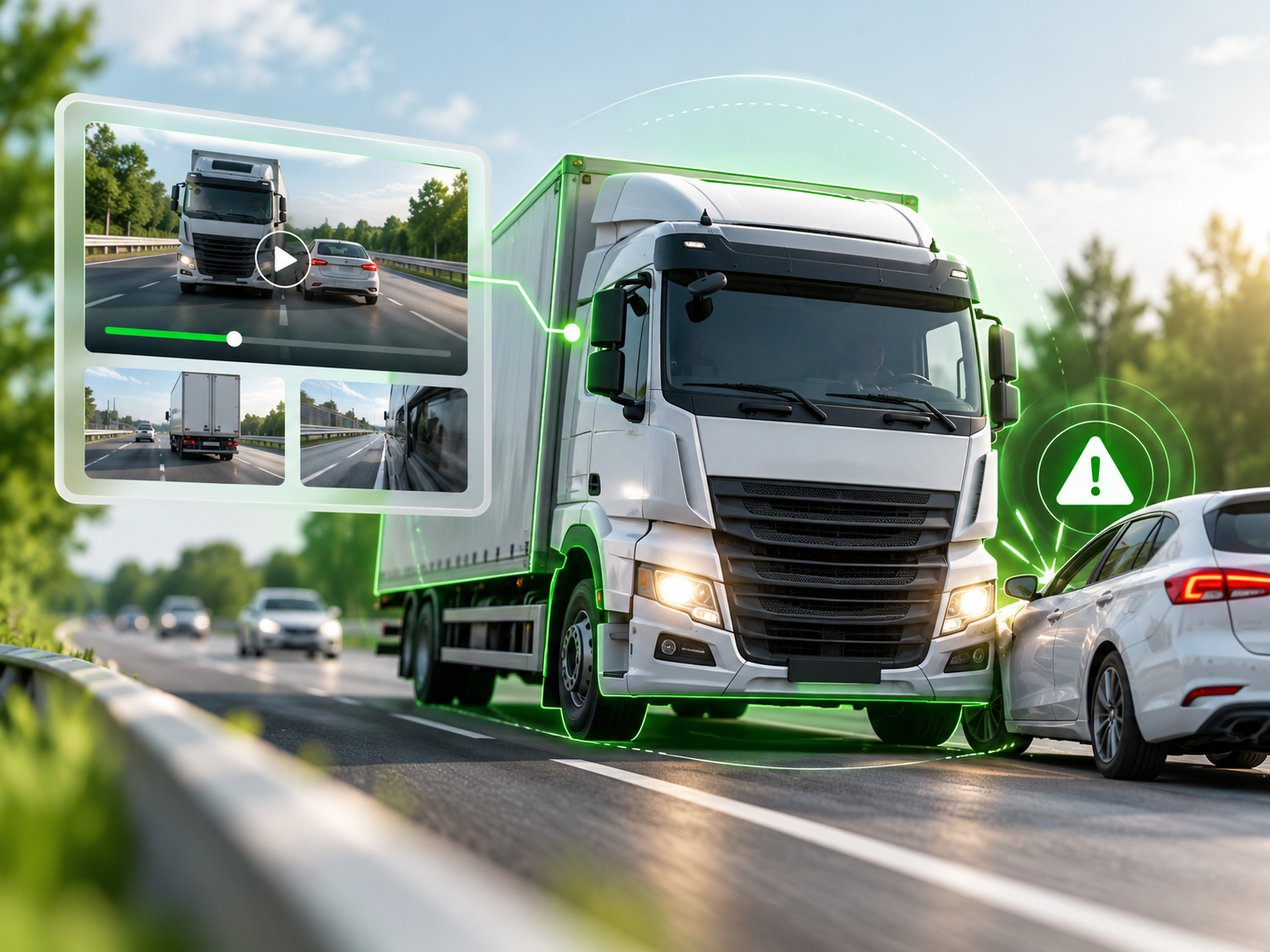
White semi-truck is very close to the side of a white car on a motorway, with a green digital overlay highlighting the truck and a warning icon near the two vehicles, indicating a telematics alert for potential collision or proximity warning, alongside inset video images showing multiple angles of the truck on the road.

Road Incidents

Review available footage to better understand the circumstances surrounding collisions and other road incidents.

Truck reversing into warehouse bay with telematics system highlighting truck perimeter and nearby car and pole using green digital lines, showing sensor warning for obstacle proximity.

Manoeuvring Incidents

Examine visual information from parking, reversing, and loading-area incidents where available.
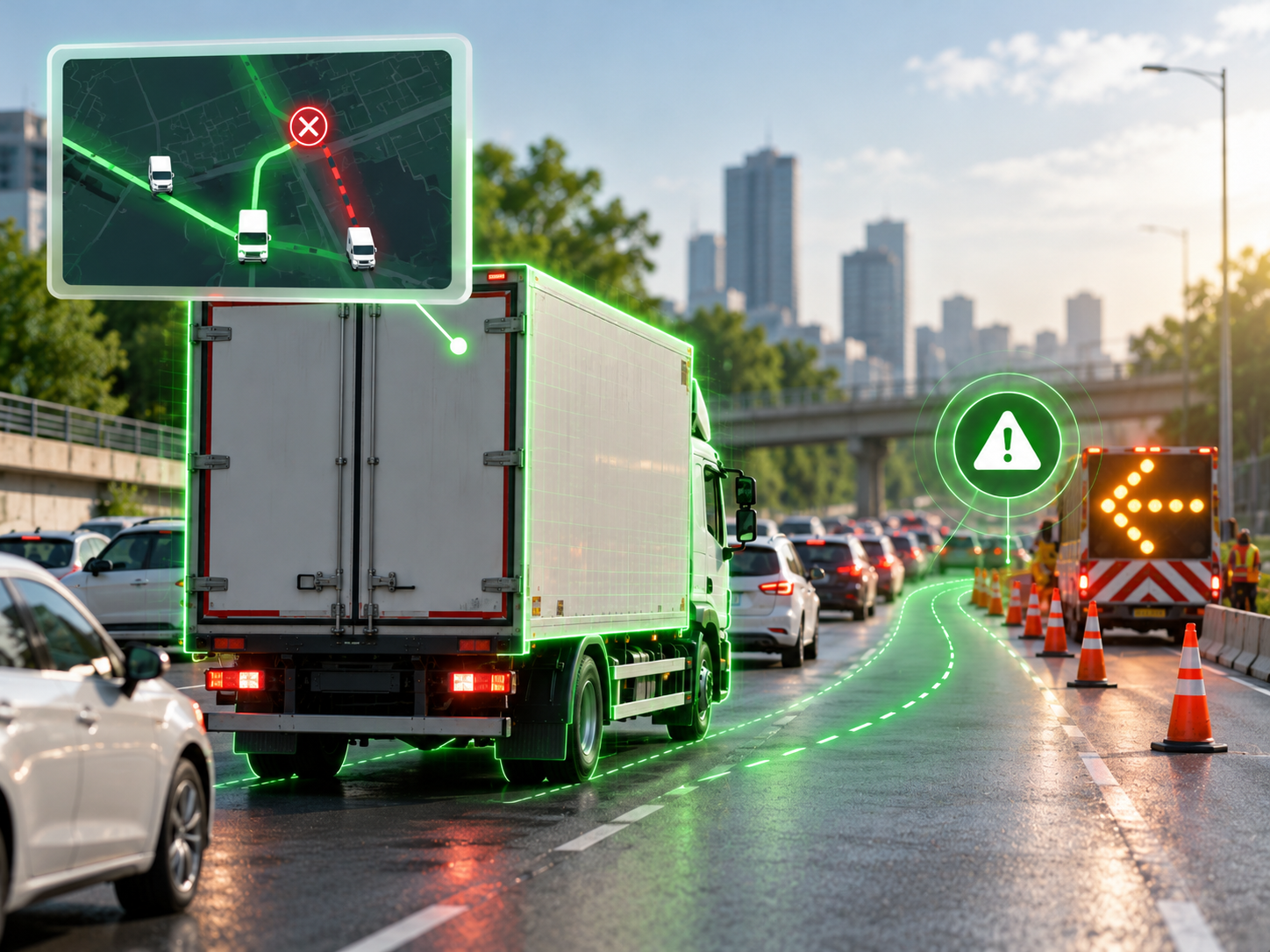
A large truck driving on a busy city highway with highlighted green lines indicating a safe reroute path around a roadwork area marked with orange cones and an arrow sign directing traffic to the left, alongside a digital map inset showing a red blocked route with an X and alternative green routes.

Disrupted Events

Use relevant footage as supporting information when reviewing conflicting accounts of an incident.
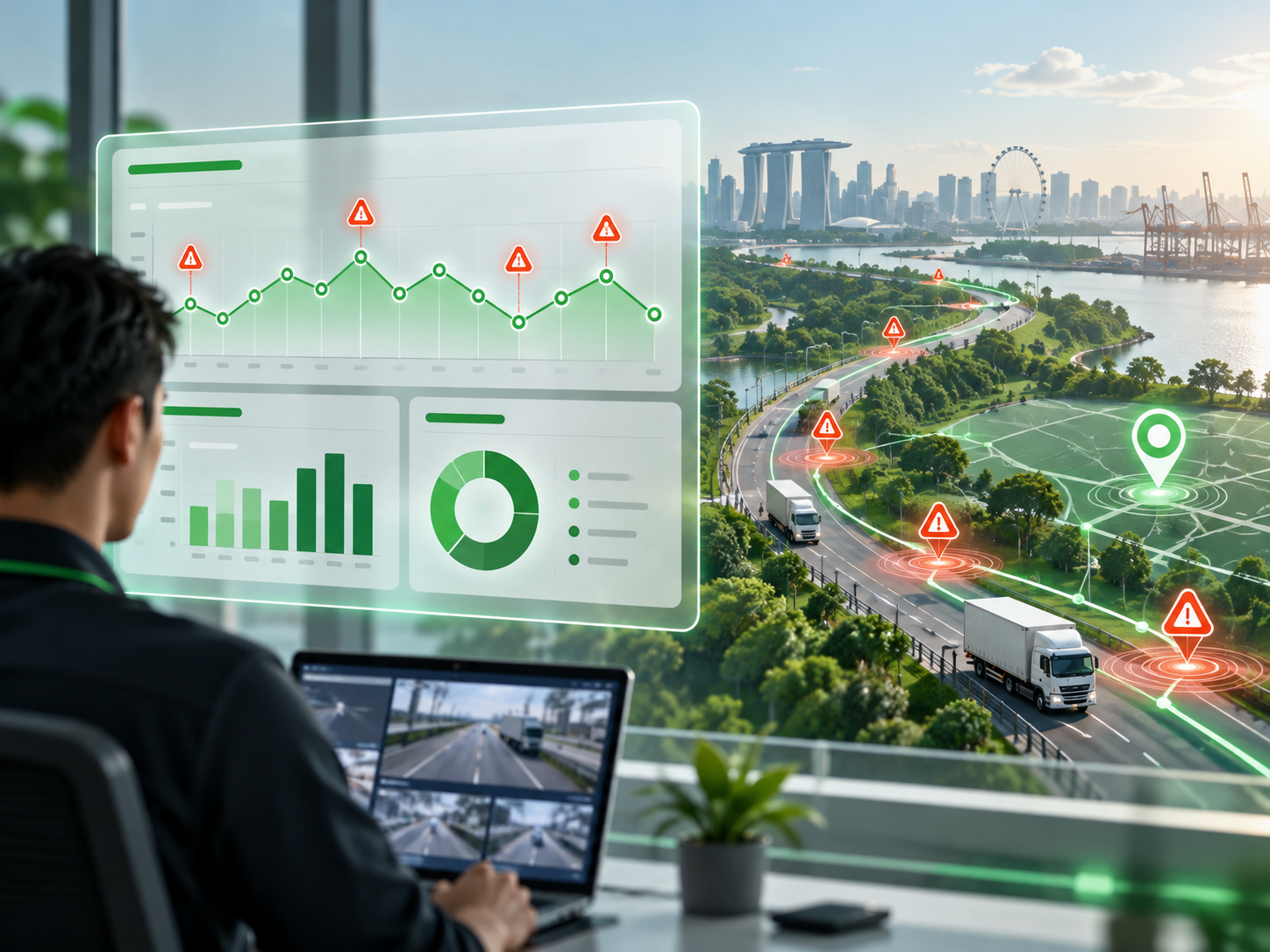
Person monitoring fleet safety analytics on a laptop with screen showing road surveillance and a futuristic dashboard displaying charts, graphs, and warning icons over a highway with trucks, set against a city skyline with notable landmarks at sunset.

Recurring Safety Risks

Identify patterns in recorded events that may warrant additional driver coaching or operational review.

Frequently asked questions

Everything you need to know about fleet camera evidence, incident footage retrieval, and video-based incident management in Singapore.

What is a fleet camera event evidence system?

A fleet camera event evidence system combines vehicle camera footage with event information to help businesses review driving incidents. Footage can allow for and capture details such as vehicle, event time, and location, allowing fleet managers to investigate incidents and retain relevant video evidence.

What types of driving invidents can fleet cameras help investigate?

Fleet camera systems can help investigate road collisions, harsh braking, unsafe manoeuvres, reversing incidents, near misses, and other unusual vehicle activity. Available footage may also help fleet managers identify recurring safety concerns and review operational incidents.

Can fleet cameras help identify recurring driver safety risks?

Yes. Reviewing recorded incidents and associated event data can help fleet managers recognise patterns such as repeated harsh breaking, unsafe manouevres, or incidents at particular locations. These findings can support driver coaching, safety reviews, and improvements to fleet operating procedures.

What is the difference between a fleet camera system and a regular dashcam?

A regular dashcam typically records footage for an individual vehicle, typically for reviewing accidents or driving incidents. A fleet camera system provides additional capabiltiies designed for managing multiple commercial vehicles, including multi-camera coverage, driving evemt detection, footage retrieval, and centralised incident review.
‍
LogisFleet's fleet camera solutions help businesses identiy relevant footagem review incidents from available camera angles, and export time-stamped video evidence for insurance clains, dispute resolution, and internal investigations.
‍
View LogisFleet's 360° AVM Camera System and Camera & Event Evidence